The Best Fluffy Pancakes recipe you will fall in love with. Full of tips and tricks to help you make the best pancakes.

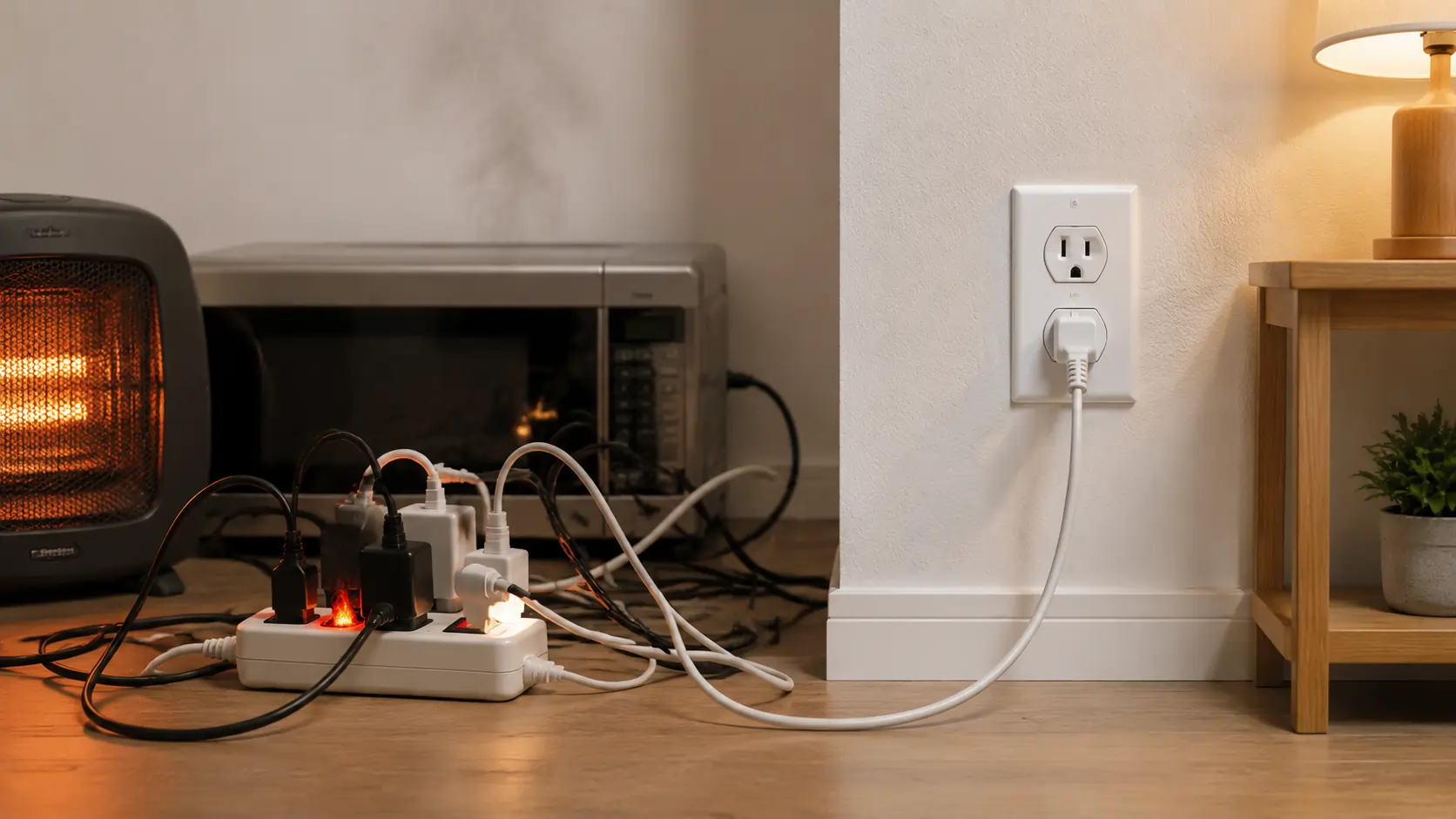
Most people treat a power strip like an extension of the wall. It is not. Some appliances overload them in ways that can damage electronics, trip breakers, or even start fires. If you have ever plugged a heater, microwave, or another strip into the same outlet and hoped for the best, you are not alone. The good news is that a few simple changes can make your setup much safer.
Many homeowners only think about electrical safety after something smells hot or a breaker trips. However, learning what to never plug into a power strip at home can prevent those problems before they happen. Most power strips are designed for low-power electronics, not large appliances that pull heavy electrical loads for long periods.
Key Takeaways
- Power strips have wattage and amperage limits that should never be exceeded.
- High-power appliances like heaters and microwaves should go directly into a wall outlet.
- Daisy-chaining power strips creates a serious overload risk.
- Motor-driven appliances often draw extra electricity when they start.
- Surge protectors and basic power strips are not the same thing.
- Old, damaged, or warm power strips should be replaced immediately.
Why Power Strips Have Limits
Before looking at what to never plug into a power strip at home, it helps to understand why these devices fail in the first place. A power strip may look simple from the outside, but inside it contains wiring that can only handle a certain amount of electrical current.
Most household power strips in countries using 120V systems are rated for about 15 amps or 1800 watts. In many 220V to 240V regions, the ratings can differ, but the idea stays the same. Every device connected to the strip adds to the total electrical load.
Here is a simple example. If your strip is rated for 1800 watts and you plug in a 1500W space heater plus a 500W monitor setup, you have already exceeded the safe limit. That extra load creates heat inside the strip. Over time, the plastic can melt, the wires can fail, and the risk of fire increases.
What Overloading Actually Looks Like
Overloading does not always cause instant sparks or smoke. Sometimes the signs are subtle at first. You may notice:
- A warm or hot power strip
- Flickering lights or monitors
- A buzzing sound
- A burning smell
- Breakers tripping repeatedly
These are warning signs that the strip is carrying more power than it safely can.
Power Strip vs Surge Protector
Many people use these terms as if they mean the same thing. They do not.
A basic power strip simply gives you more outlets. A surge protector adds protection against voltage spikes caused by lightning, unstable wiring, or sudden electrical surges. A surge protector usually includes a joule rating that tells you how much surge energy it can absorb.
Organizations like the entity[“organization”,”Electrical Safety Foundation International”,”United States”] recommend using certified surge protectors for sensitive electronics such as computers and televisions.
Never #1: Space Heaters and Electric Fireplaces
If there is one device to never plug into a power strip at home, it is a portable space heater. These appliances use huge amounts of electricity continuously while running.
Most portable heaters draw around 1500 watts. That is already close to the maximum safe load of many household strips. Adding even one more device can overload the circuit.
Why Space Heaters Are So Dangerous on Strips
Unlike a phone charger or laptop, a heater keeps pulling heavy power for long periods. That constant demand creates heat inside the strip itself. If the strip has thin internal wiring or poor-quality plastic, it may overheat quickly.
This is why many heater manufacturers clearly state in their manuals that the unit should be plugged directly into a wall outlet.
The danger becomes even greater if the strip is:
- Old or damaged
- Covered by carpet or fabric
- Used with an extension cord
- Plugged into another strip
Electric Fireplaces Have Similar Risks
Small electric fireplaces may look harmless because they resemble decorative furniture. However, they work much like large heaters. They use high wattage and create continuous electrical demand.
Plugging them into a strip increases the chance of overheating, especially during winter when the appliance may run for hours every day.
Never #2: Refrigerators and Large Kitchen Appliances
Refrigerators are another common item to never plug into a power strip at home. Even though they may not seem power-hungry all the time, they create powerful startup surges.
When the refrigerator compressor turns on, it briefly pulls much more current than during normal operation. That sudden surge can stress or damage a strip.
The Problem With Compressor Appliances
Anything with a compressor usually belongs directly in a wall outlet. This includes:
- Refrigerators
- Freezers
- Air conditioners
- Wine coolers
These appliances cycle on and off throughout the day. Every restart creates an electrical spike that power strips are not designed to handle repeatedly.
Kitchen Circuits Are Already Busy
Kitchen outlets often share circuits with multiple devices. If you add a refrigerator to a strip that already powers coffee makers, chargers, or small appliances, the total load rises quickly.
In some homes, this can cause repeated breaker trips. In others, the strip may slowly overheat without obvious warning signs.
The entity[“organization”,”National Fire Protection Association”,”United States”] notes that overloaded electrical systems remain a major cause of residential electrical fires.
Never #3: Microwaves and Toaster Ovens
Microwaves and toaster ovens are among the highest-wattage appliances found in many homes. Even compact models can draw 1000 to 1500 watts while operating.
That level of power demand makes them unsafe for most power strips.
Why These Appliances Stress Electrical Circuits
Microwaves use high-powered internal components to generate heat quickly. Toaster ovens do something similar using heating elements that remain extremely hot during operation.
Unlike low-power electronics, these appliances do not sip electricity gradually. They pull large amounts of current immediately and consistently.
Shared Circuits Make the Problem Worse
Many people use power strips in kitchens because outlets are limited. The problem is that kitchens already place heavy demands on household circuits.
For example, imagine this setup:
| Appliance | Estimated Wattage | Risk on Power Strip |
|---|---|---|
| Space heater | 1500W | Very high |
| Microwave | 1200W | High |
| Refrigerator | 700W startup surge | High |
| Gaming PC | 500W | Moderate |
| Phone charger | 20W | Low |
A microwave running alongside other appliances can easily push a strip beyond its safe limit.
Even Expensive Surge Protectors Have Limits
Some people assume a premium surge protector solves the problem. It does not. Surge protection helps against voltage spikes, not continuous heavy loads.
No matter how expensive the strip is, high-wattage kitchen appliances should still connect directly to the wall.
Never #4: Another Power Strip
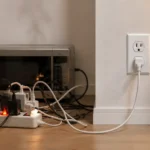
Plugging one power strip into another is called daisy-chaining. It is extremely common and also one of the biggest electrical safety mistakes in homes and offices.
People usually do this because they run out of outlets. However, daisy-chaining increases the risk of overload dramatically.
Why Daisy-Chaining Is Dangerous
When two strips connect together, people often lose track of the total electrical load. Devices spread across multiple strips may still feed into the same wall outlet and circuit.
The result is a hidden overload.
For example, you may think each strip is only half full. In reality, both are drawing power through one outlet behind the wall.
Surge Protection Stops Working Properly
Another issue is that surge protection becomes less reliable when strips are chained together. The protection systems can interfere with each other or fail to work as intended.
This is why many workplace safety codes prohibit daisy-chaining completely.
What To Do Instead
If you constantly run out of outlets, the safer solution is:
- Buy a single high-quality strip with enough outlets
- Use a professionally installed wall outlet
- Rearrange devices across multiple wall circuits
A longer certified strip is much safer than stacking several together.
Never #5: Washing Machines and Tumble Dryers
Laundry appliances place major demands on household electrical systems. Washing machines and tumble dryers use motors, pumps, and heating elements that consume large amounts of power.
Because of this, they should never plug into a power strip at home.
Dedicated Circuits Exist for a Reason
In many homes, laundry appliances use dedicated circuits. That means the outlet is intended for that appliance alone.
This setup prevents overloads and helps reduce fire risks.
When a dryer or washer shares a strip with other devices, the wiring inside the strip can overheat quickly.
Startup Surges Add Extra Stress
Like refrigerators, laundry machines create startup surges when motors begin spinning. Dryers also generate long periods of high heat.
That combination makes them especially risky for low-quality strips.
What If There Is No Nearby Outlet?
Some laundry rooms have awkward layouts that tempt people to use extension cords or strips. If the appliance cable does not reach safely, it is better to:
- Have a qualified electrician install a closer outlet
- Rearrange the laundry setup
- Use only manufacturer-approved heavy-duty solutions
Improvised electrical setups are rarely safe long term.
How to Choose a Power Strip That Is Actually Safe
Knowing what to never plug into a power strip at home is important, but choosing a safe strip matters too. Not all models offer the same level of protection.
Look for Certification Labels
Certified strips go through safety testing. Depending on your region, look for labels from:
- CE certification in Europe
- Other recognized electrical safety agencies
Avoid unbranded strips with no visible safety markings.
Check the Joule Rating
If you want surge protection, look for the joule rating on the packaging. Higher numbers generally mean better surge absorption capacity.
For basic home electronics, many experts recommend at least 1000 joules.
Replace Old or Damaged Strips
Power strips wear out over time. Internal components degrade, especially after power surges.
Replace the strip immediately if you notice:
- Cracked plastic
- Loose outlets
- Discoloration
- Buzzing sounds
- Heat during normal use
A damaged strip should never stay in service.
Common Devices That Are Usually Safe on Power Strips
After hearing about dangerous appliances, many people wonder what they can safely connect.
Most low-power electronics are fine when used responsibly. Examples include:
- Phone chargers
- Lamps with LED bulbs
- Monitors
- Routers
- Laptop chargers
- Printers
The key is keeping the total load within the strip’s rating.
Gaming Setups Need Attention Too
Modern gaming PCs, multiple monitors, and speakers can add up quickly. A high-end desktop computer alone may use several hundred watts during gaming.
If you run a gaming setup from one strip, it helps to calculate the total power draw first.
Many manufacturers list wattage information directly on the power supply or device label.
Warning Signs Your Power Strip Is Unsafe
Sometimes a strip gives clear warnings before failure happens. Paying attention to those signs can prevent damage.
Heat Is Never Normal
A slightly warm charger may be normal. A hot strip is not.
If the strip feels hot to the touch, unplug devices immediately and reduce the load.
Burning Smells Need Immediate Action
A burning plastic smell often means internal wiring is overheating.
Disconnect the strip right away and stop using it.
Flickering Power Signals Trouble
Lights dimming or electronics flickering may indicate an overloaded circuit or unstable connection.
Do not ignore repeated flickering around one outlet or strip.
Can Smart Power Strips Improve Safety?
Smart power strips have become more popular in recent years. Some models can monitor energy usage or automatically cut power to unused devices.
While these features can help save electricity, they do not change the basic safety rules.
A smart strip still has electrical limits.
You should still avoid plugging high-power appliances into them.
Are Extension Cords Safer Than Power Strips?
People sometimes replace a strip with an extension cord thinking it solves the problem. Usually, it does not.
Most standard extension cords are also not designed for continuous heavy loads.
Heavy-duty extension cords exist for temporary use with tools or outdoor equipment. However, they should not replace permanent household wiring.
The safest long-term solution is always proper wall outlets installed where needed.
How Electrical Fires Often Start
Electrical fires rarely begin with dramatic sparks. More often, heat builds slowly over time.
A strip overloaded every day may weaken internally for months before failing. Dust, poor airflow, and damaged wiring can make the situation worse.
According to electrical safety experts, many preventable fires begin with overloaded outlets, damaged cords, or improper use of extension products.
That is why learning what to never plug into a power strip at home matters even if your setup has seemed fine for years.
FAQs
Can I plug a TV into a power strip?
Yes, televisions are usually safe on a high-quality surge protector. Many people use surge protectors specifically to protect TVs from voltage spikes. Just avoid overloading the strip with too many other devices.
Is it safe to leave a power strip on all the time?
It can be safe if the strip is not overloaded and is in good condition. However, older strips or overloaded setups should not stay powered continuously.
Can a power strip catch fire when nothing is plugged in?
It is rare, but damaged or defective strips can still fail even without a heavy load. This is another reason to replace old strips with certified models.
How do I know if my power strip is overloaded?
Warning signs include heat, buzzing, flickering electronics, burning smells, or tripped breakers. Checking the wattage of connected devices also helps prevent overloads.
Are surge protectors worth buying?
Yes, especially for computers, televisions, and gaming systems. Surge protectors help defend electronics from sudden voltage spikes that may damage sensitive components.
Conclusion
Most power strips are designed for small electronics, not heavy appliances. That is why it is important to understand what to never plug into a power strip at home before problems happen.
Space heaters, refrigerators, microwaves, other strips, and laundry appliances all place major stress on electrical systems. In many cases, the safer choice is simply plugging these devices directly into the wall.
The good news is that electrical safety does not need to be complicated. A certified surge protector, reasonable power usage, and attention to warning signs go a long way toward protecting your home.
For more practical home tech and safety guides, read related articles about protecting electronics and improving everyday electrical safety.